Work analysis for the 2018/2019 school year - How did it really go?
 Micke Kring
·
Micke Kring
·
So it’s time to tie up the 2018 / 2019 school year and look back at what I managed — or failed — to accomplish during this period in my role as IT educator at Årstaskolan. In my job, which mostly consists of production, planned time for analysis and reflection is needed. And since I’m a slave to my own schedule, that time has now come.
Last school year’s bigger projects consisted of building the Course Portal (online training) with its courses, where a large part of my professional development was learning Python to be able to create courses. Other things were starting Open Lab — voluntary in-person sessions for, for example, coming to workshop or to get a hand to hold. I also built the school’s Makerspace and started a helpdesk system for slightly more efficient handling of the school’s issues. And of course a lot of other stuff.
2018 / 2019
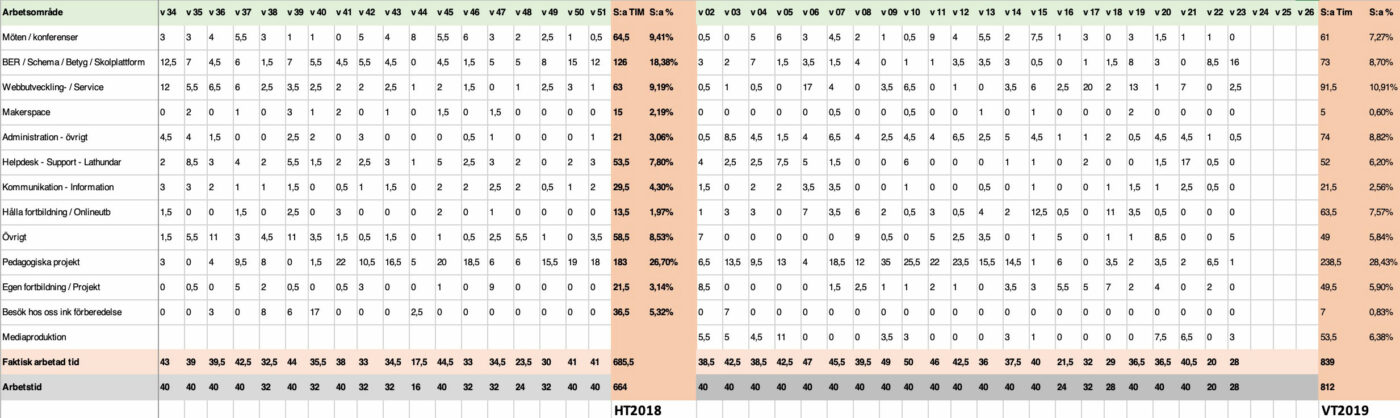 This year’s weeks with hours categorized
The image above (can be enlarged) shows the number of hours in the different categories over the whole school year. I schedule everything in my calendar and compile it. For me it’s important to be able to follow up that I’m spending my time on what I want to do, what my manager wants me to do, and where it makes a difference. It’s very easy for time for proactive projects to be eaten up by reactive things. There’s always something someone perceives as urgent. Therefore I try to be relentlessly strict in prioritizing my tasks, and I also batch and schedule similar tasks to be as efficient as possible. That in turn creates time for the slightly bigger projects that I’m passionate about.
 Calendar and Things are always open on my secondary screen
Change in tasks
Since last year we finally have a new IT coordinator who takes care of the technology. That means I’ve had the opportunity to focus more on the pedagogical side of IT, development, and less on fixing tablets. It has also meant that I’ve had to learn to let go of certain tasks that are no longer mine, something I’ve been doing for almost 20 years. But how nice that is. :)
Pedagogical projects
A new category for this year, but something I’ve always fiddled with, is Pedagogical projects. Now there is officially time for this, since I’ve removed all the IT-technical tasks. This year more than a quarter of my time has gone to these projects. Here is a short presentation of what I’ve built, created, and developed.
Hearly - an audiobook app with books by students
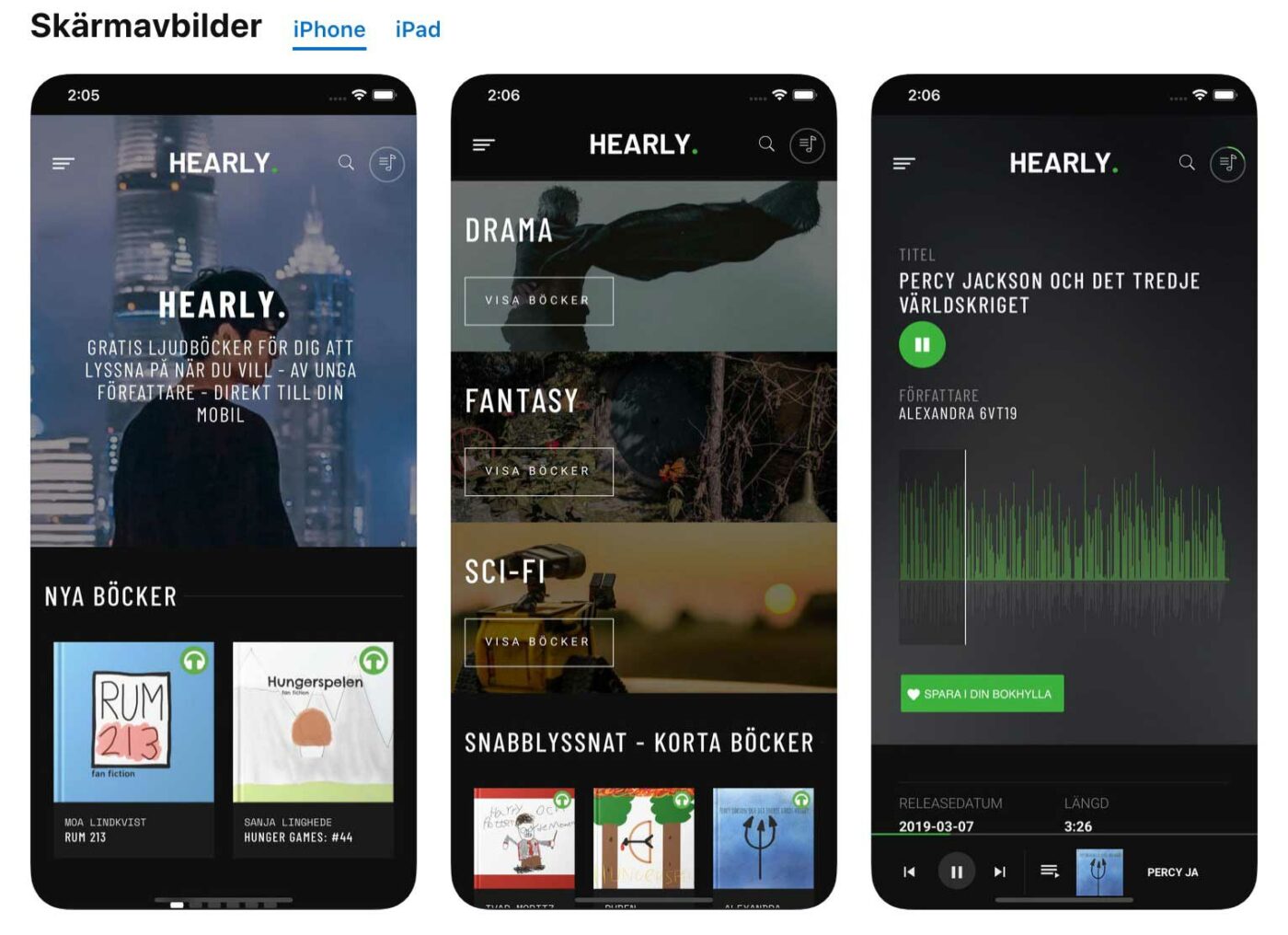 Hearly was born out of a request from one of our Swedish teachers, Anette, where the students in her classes worked on creating audiobooks. Currently only on the App Store — but an Android version will come later. Built in Swift and WordPress. Hearly - App Store
MIKportalen - progression and working materials within MIK
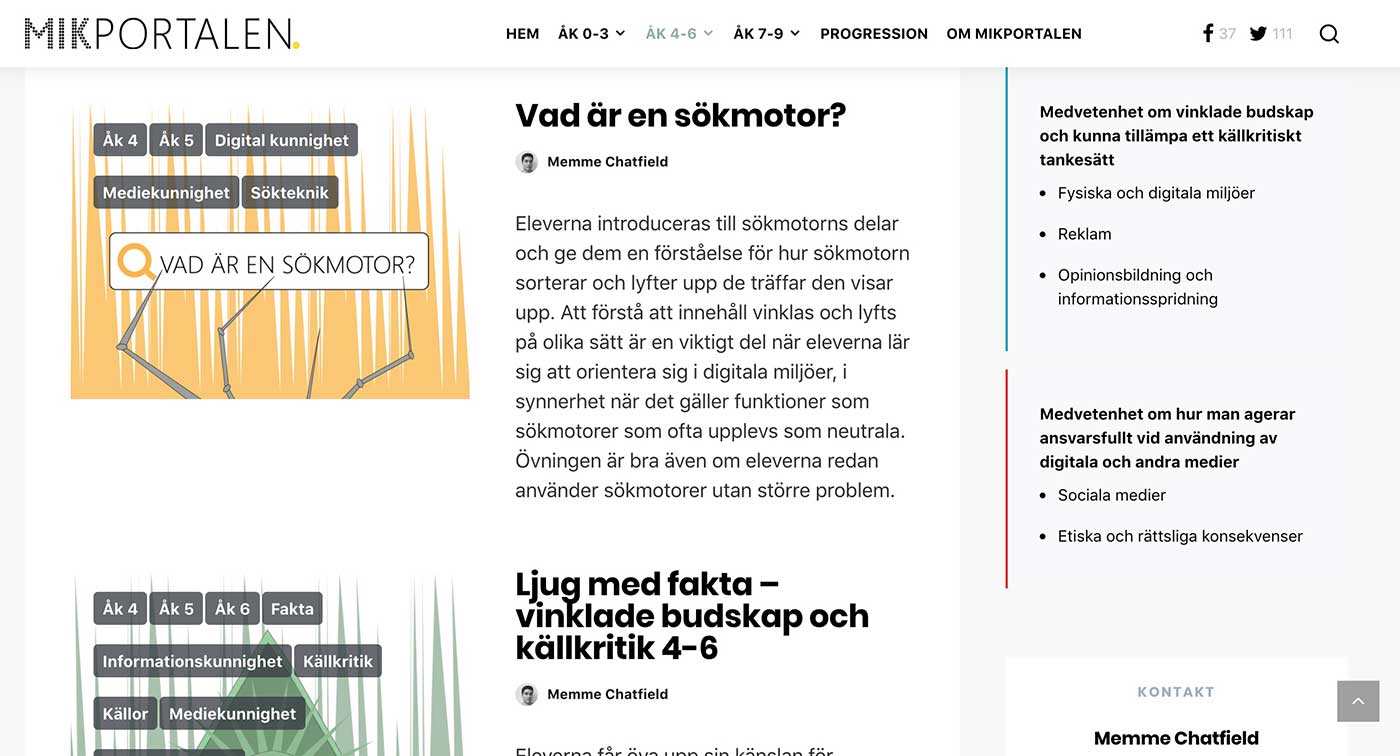 MIKportalen is a site where we’ve collected tasks and materials for working with primary school students’ media and information literacy. MIKportalen is built around the curriculum’s goals and progression regarding information searching, source criticism, digital tools, and safe communication. All these parts fall under MIK. Built in WordPress. The material was created by our librarian Memme. Of course CC and free to use. mikportalen.se
Kodknäck - progression and example activities in programming
 Kodknäck is a site where we publish the ongoing work we’re doing to create a progression for programming in primary school. Connected to the progression we provide teacher guides, sample activities on how teachers can teach the concepts and building blocks in programming that are important, as well as professional development. Built in WordPress. The material was created by me and Jonas Johansson and all material is free to use under CC. kodknack.se
#sistabossen - making your own video game
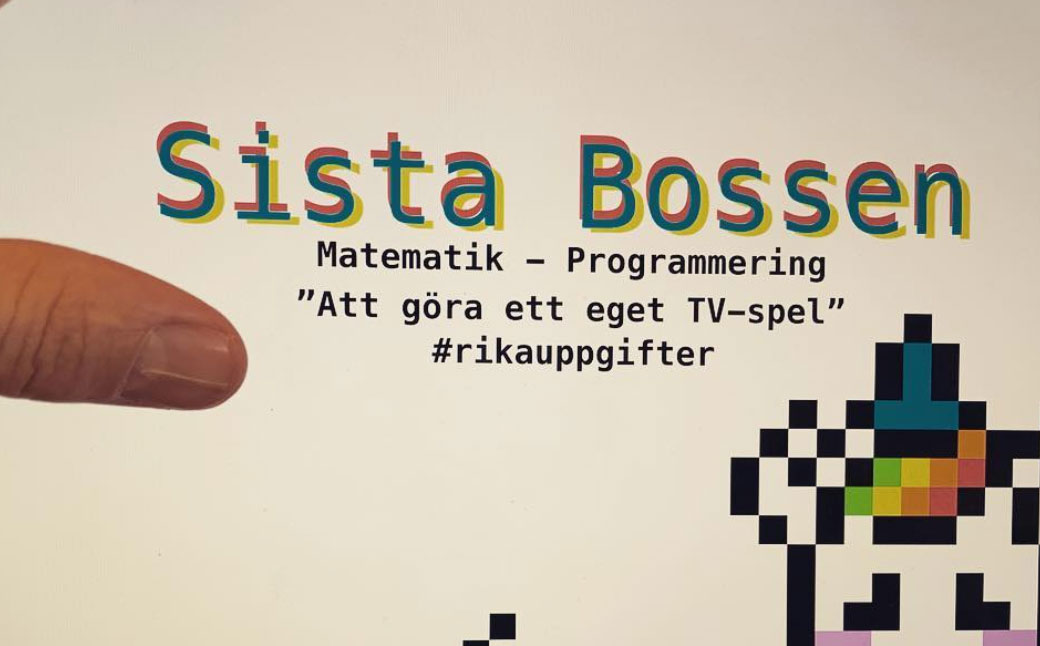 Sista Bossen is a project, or rather a rich task over a longer period, aimed at teaching programming in Year 4 by having students create a game. Martin Fernström, the teacher in this case, together with a bit of help from me, created the project while we implemented it in the classes. Right now we are evaluating and improving it. A teacher’s guide will, as usual, be released to the public. There isn’t a link to it yet, but more information will come next year.
Media production
Media production — and especially video — has increased a lot over the last year. Thanks to Makerspace and its green screen, many more have noticed — and started to try — creating video. Since everyone can easily book the Makerspace via a web app and tripods, lights and everything are set up, the threshold is low. In addition, over many years I’ve built up a production setup with 4K cameras, livestreaming capability and more.
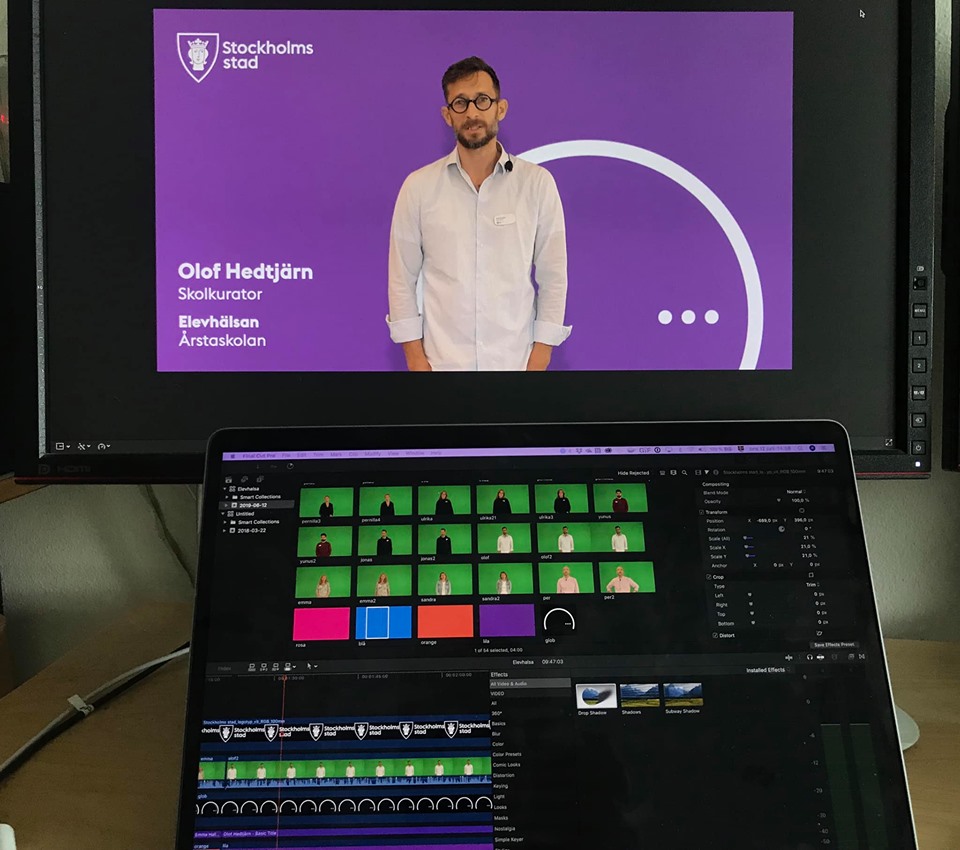 Editing short presentation clips for the school’s student health services
I personally created more video during the spring term than the entire previous school year and I’ve held quite a few introduction sessions and workshops.
Makerspace
Something I’m a bit disappointed about is that I haven’t taken hold of — and developed — our Makerspace more. It has unfortunately been deprioritized. The room is used, but mainly for media production. Next year I’ll try to get more maker-activity going there. We already have lots of equipment in the form of 3D printers, robots, soldering stations, materials and so on. I’ve run a few Open Labs where I created together with staff and next year I will expand that.
Web
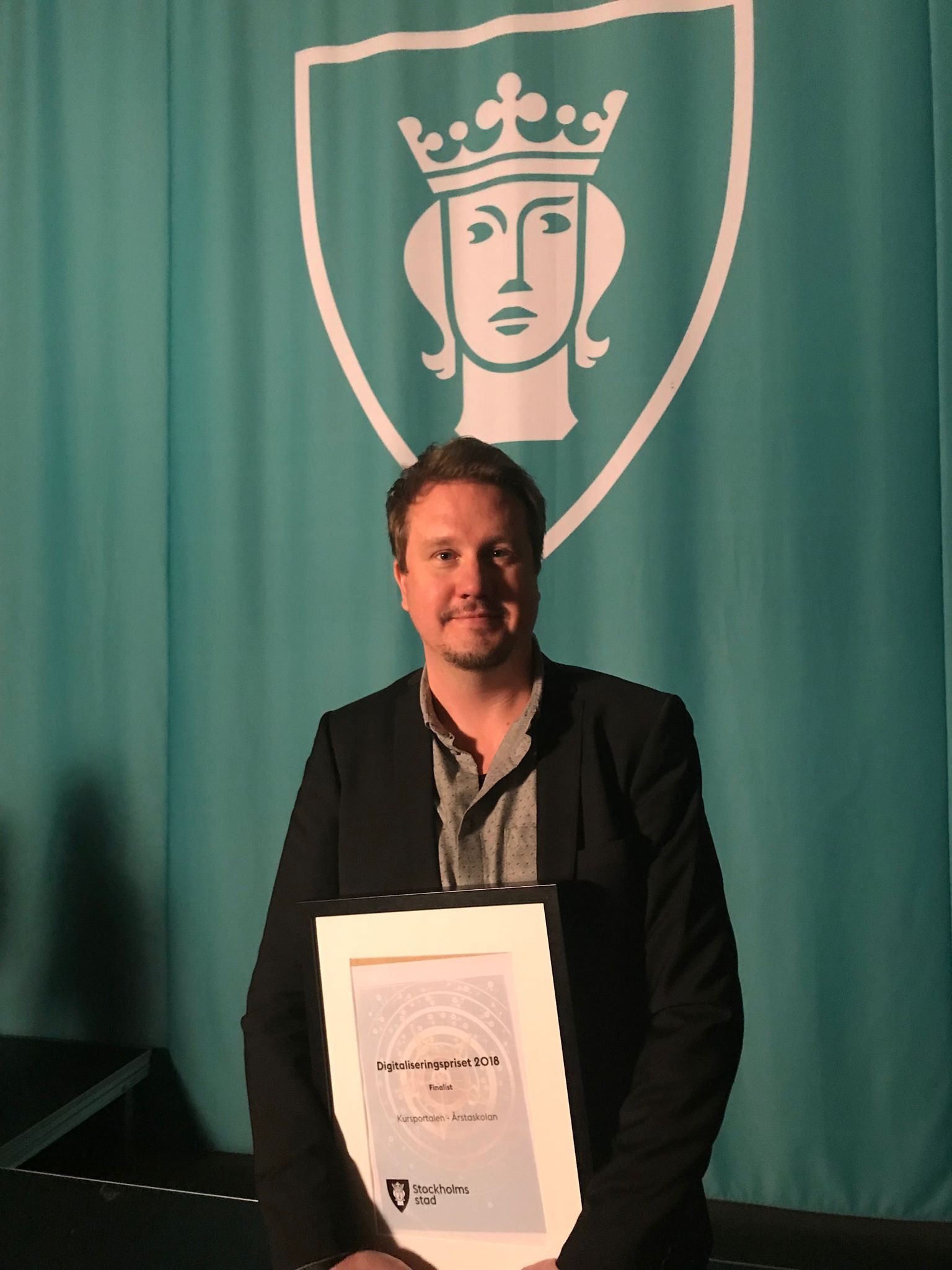
The web, which is a big part of the pedagogical arenas for the students, but also for our communication and staff professional development, now consists of 13 websites and 31 blogs. I run, develop and host these on our own servers. The ability to build and launch quickly is unbeatable. Running, building and maintaining these sites and servers consistently takes about 10% of my time. This year’s focus has been on continuing to build help-to-self-help, that is expanding support.arstaskolan.se with quick guides and manuals as a complement to the Course Portal, with online courses including programming. The Course Portal was also in 2018 nominated for, and one of the finalists in, Stockholm City’s Digitalisation Prize.
 Digitalisation Prize 2018
Pedagogical administration
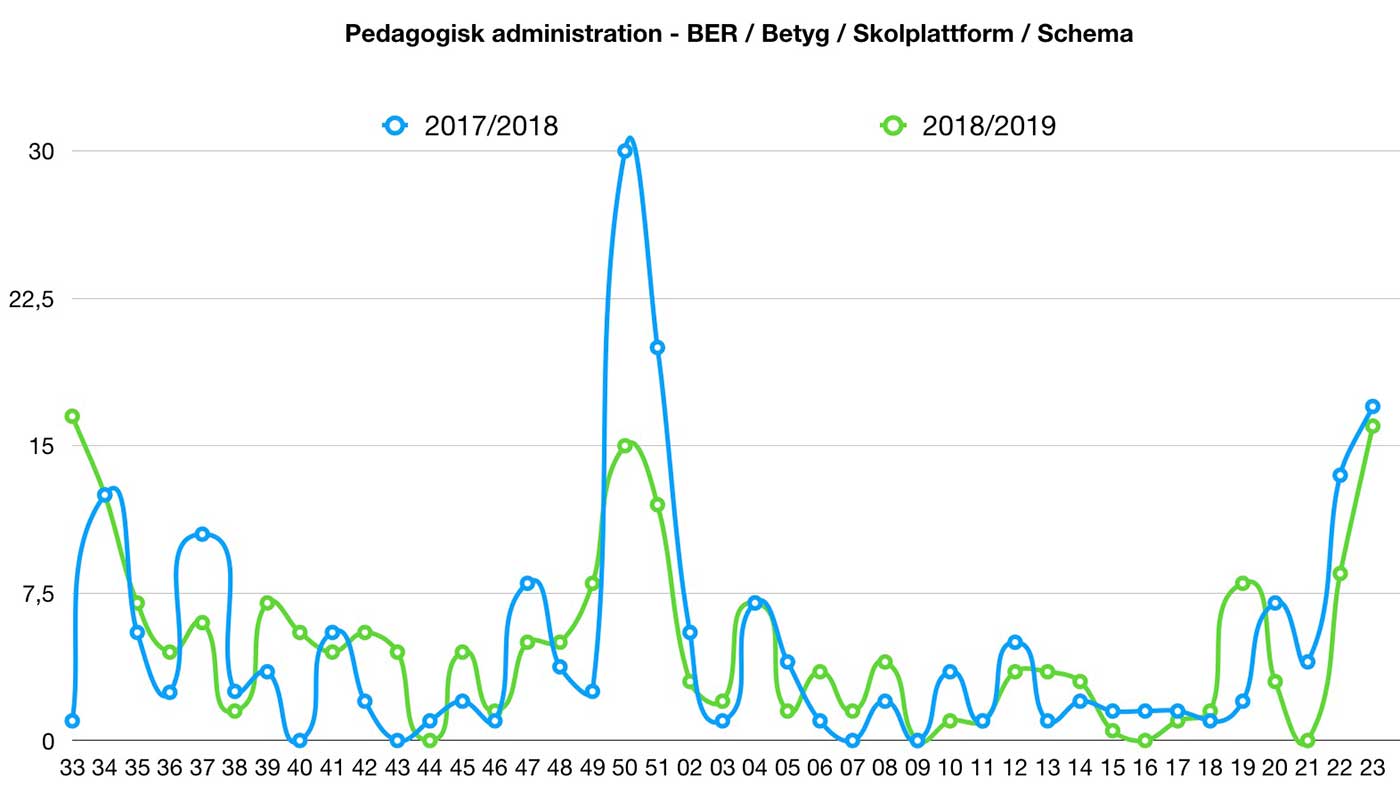
Pedagogical administration remains at the same levels despite more tasks[/caption] Around 20% of my position goes to various types of administration. The pedagogical part of my administration, which consists of, among other things, grades, assessments, timetables, teaching groups, the school platform, student documentation and other things, has increased task-wise this year because I’ve also taken on mother tongue (modersmål) management. Mother tongue is administratively like having an extra school, where we have 33 small classes. It was at my initiative because it’s never good to have a bunch of overlapping functions spread across different people. So despite increasing the number of tasks, my working hours have decreased since last year, though it’s pretty even.
Other administration
Other administration is a bit of a catch-all where things like password resets for students, analysis of various projects and results, creation of policy documents such as IT strategies, other strategic thinking and similar end up. Regarding strategies, plans and policy documents it’s important to prioritize work time. Nobody cares about this type of document and the like, except those who created them. The focus must be on implementation.
Meetings and conferences
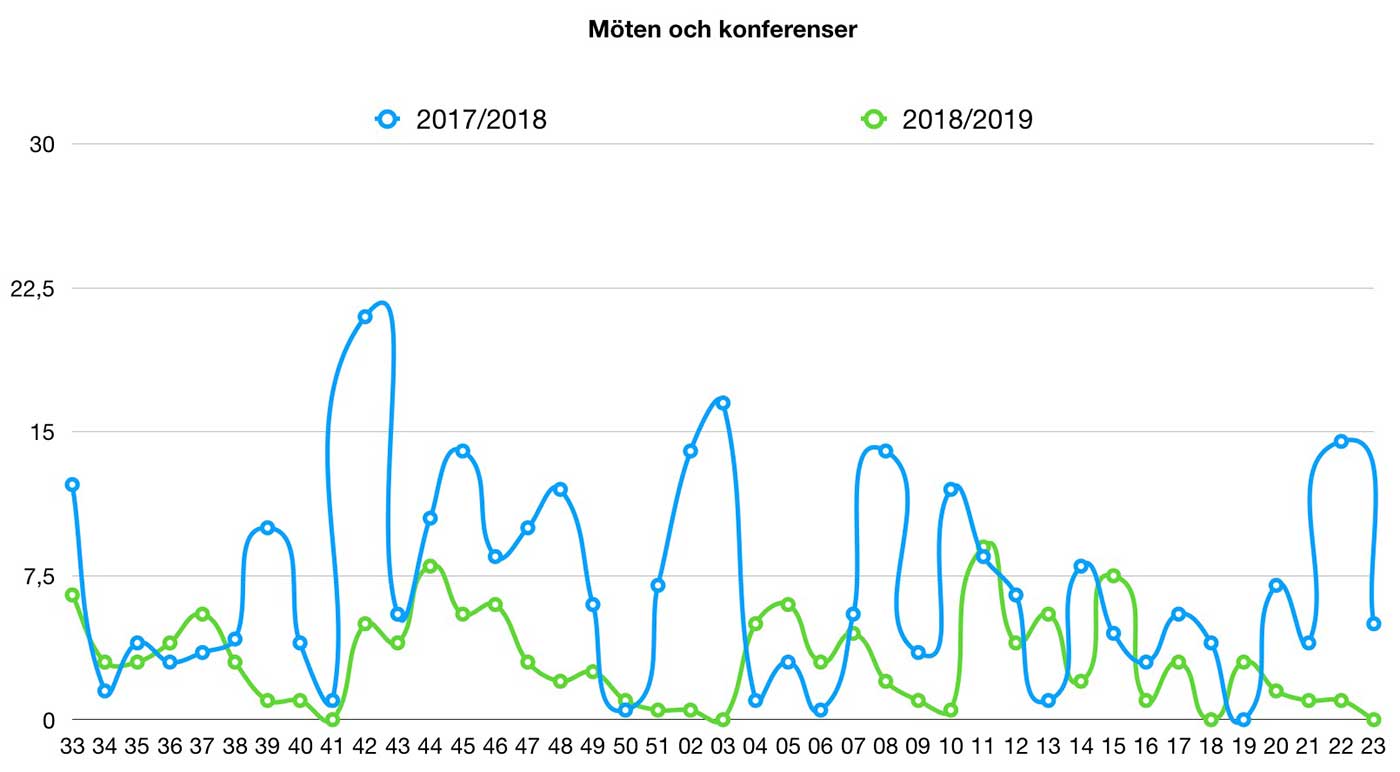 This is a category I constantly fight to reduce. And which I succeeded at this year! :) Unlike last year (where I had also reduced this category) I’ve decreased it significantly. Last term I averaged around 2.8 hours per week. Much of the drop is about more effective meetings and that I opt out of meetings. If you want to read more about how I see meetings you can read this.
Own professional development and personal projects
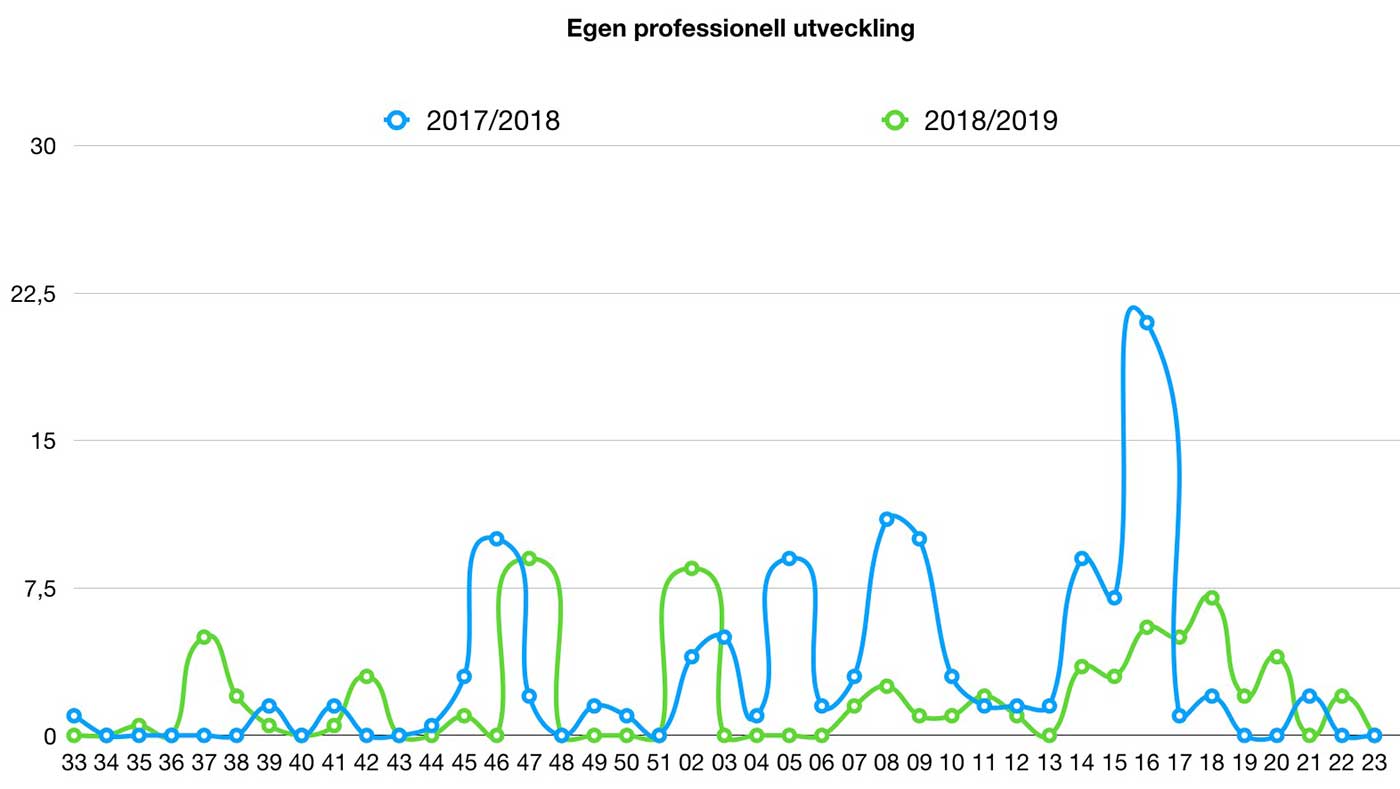 To work on my professional development I usually create various types of projects for myself. Previous examples have been self-watering pots that can tweet, SMS and speak. Or digital “welcome - occupied - nobody in” screens controlled by calendars. It always needs to be some kind of product, since I have difficulty learning just for the sake of learning. This year I haven’t spent the same amount of time on my professional development, although the Hearly app required quite a bit of learning about, among other things, Apple’s Swift. So I’ve gained a lot of new knowledge.
Room booking with a display
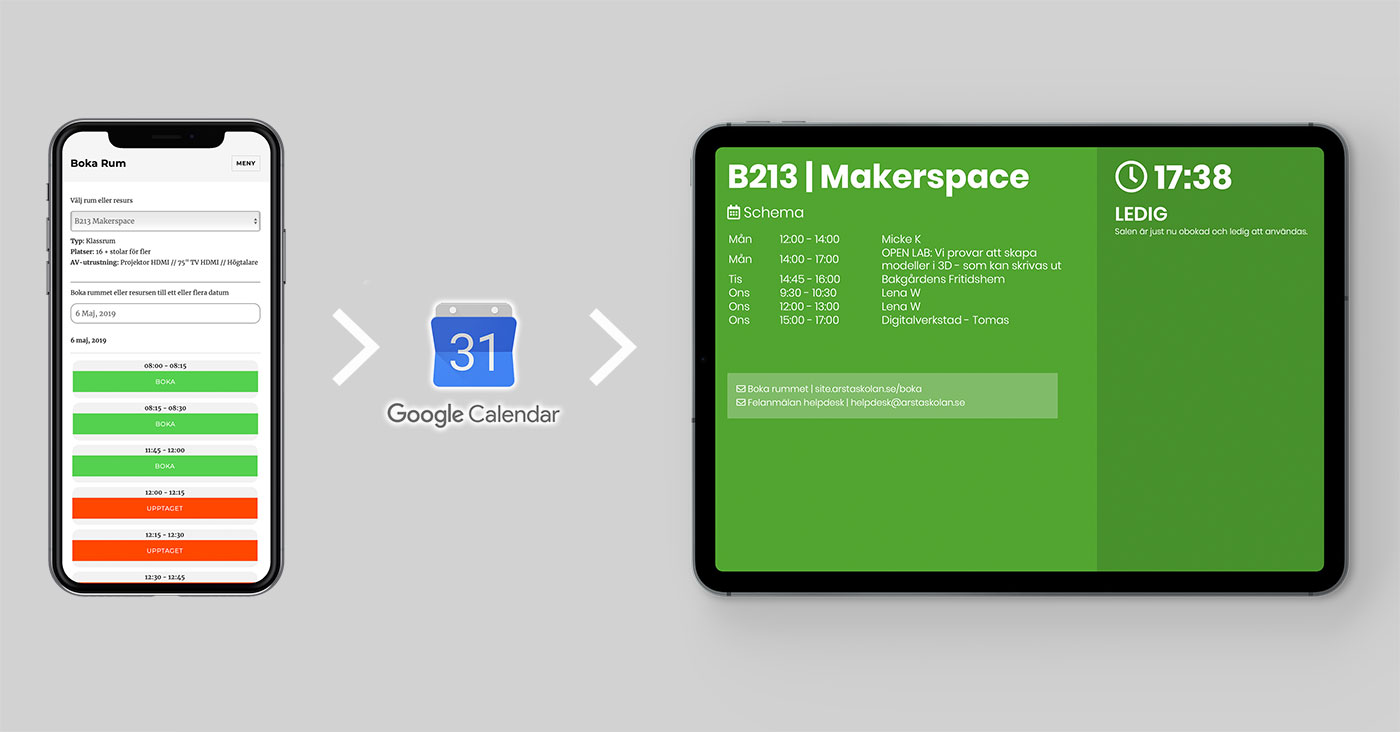 A further development of a previous project, where I now have a simple web app that staff can easily use to book rooms. The schedule and occupied / free can be shown on a display outside the room. Runs on a Raspberry Pi and includes Python, WordPress and some HTML and such. You can read more about it here
IoT start — connected rooms
I’ve just started a small IoT (internet of things) project with connected classrooms. I hope to have a prototype up in the Makerspace when the new school year starts. Read more here
Creating training materials and in-person training
This year I haven’t created any more courses for the Course Portal. Programming courses for primary school have been ready for two years, so there hasn’t been much need. Instead I’ve focused on creating quick guides and manuals for our support site, which I mentioned earlier. The Open Labs I’ve run have been of mixed interest. The question is whether it’s worth it? On the other hand they are completely voluntary and those who come seem to appreciate these workshops. Maybe I should try expanding them, but it’s entirely dependent on time. I’ll probably need to think more about this. I’m still firmly of the opinion that all staff training must be possible online, asynchronously. How you want. When you want.
Final words
Of course this is only a selection of what I’ve been up to and we’ve also had some other things running during the year, such as exchanges and a transition to a new IT supplier, introduction of a new school platform, structuring communication channels and content, quite a few visits from around the world, some fun other visits, a few external talks (even though I’m extremely restrictive with that) and hanging out every day with my great colleagues.
Overall I’m satisfied with my work this year and if I’m forced to grade myself I’d give myself an A again this year. ;) It’s largely about prioritization, planning, insane structuring and being able to do things “good enough” while keeping the bar really high. At least if I’m to manage everything I want to be able to do.
Have a great summer, everyone!
About the author
Micke Kring
I'm fascinated by what happens when people and technology meet. After nearly 30 years in education and development, I explore, prototype and teach AI with the same playful curiosity as when I first started out.