IoT project | Connected spaces - Part 1: Getting Started
 Micke Kring
·
Micke Kring
·
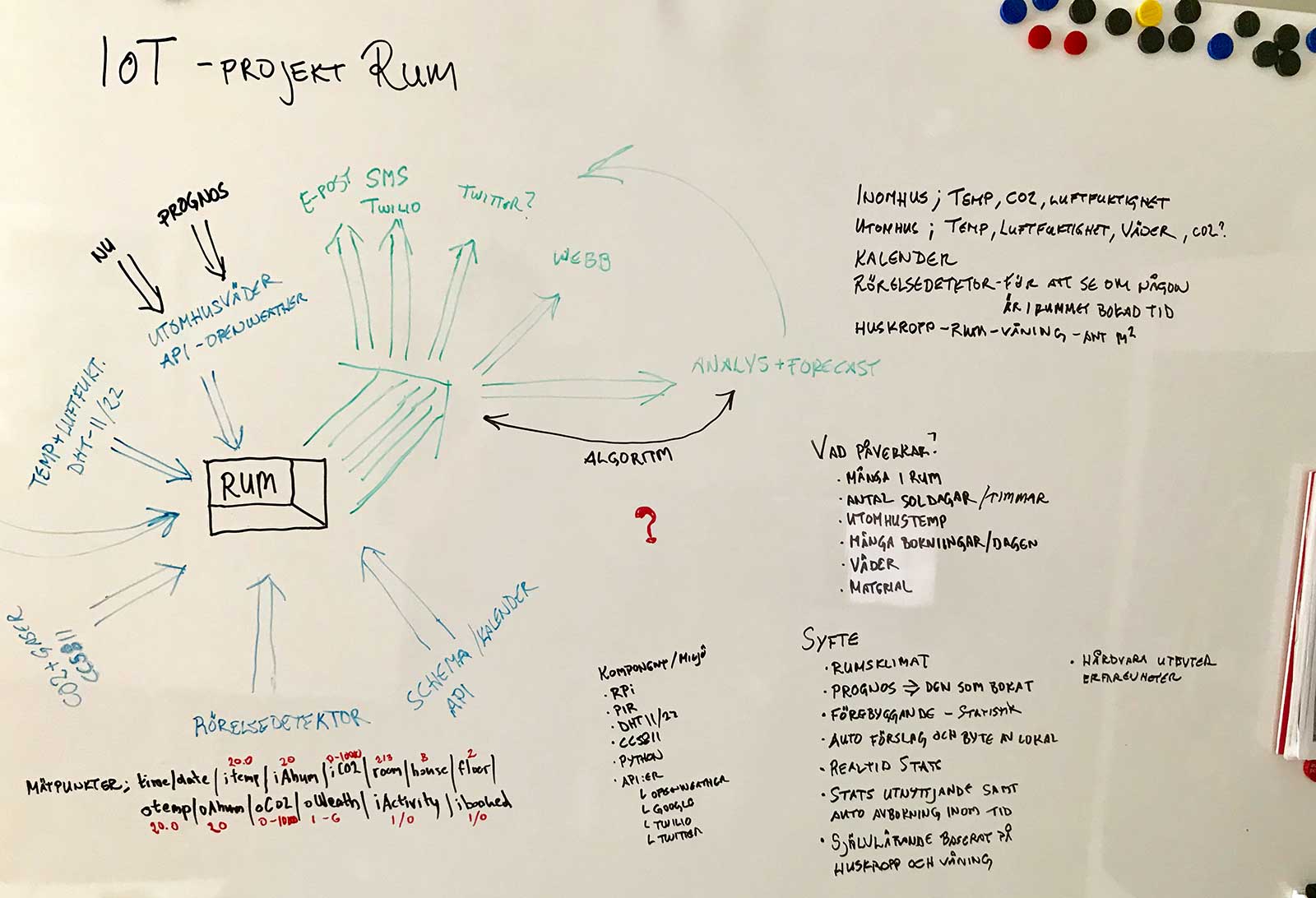
Now it’s time for me to kick off my last development project for this season. It’s the kind of project I tinker with to take care of my professional development — what used to be called continuing education. This time it’s about stitching together a few previous projects and simply starting to connect rooms at the school, equipping them with some sensors and ways to communicate with the people who will use the rooms. If it’s too hot or the environment in a room is poor, the room should be able to suggest and book another room with a better environment. So the rooms should also be able to communicate with each other.
Now that we’re at the end of May and really heading into summer, the high temperatures in the school’s rooms are making themselves felt again. It’s no surprise that I average around 30°C in my room every day. That’s also how it can be in classrooms. Especially when you work at a school built in 1946. And considering that, for example, some national exams are held at this time, it would be great if the rooms where they’re held were a bit smarter and could warn early and offer alternatives. It’s also about making smarter use of our spaces. We have quite limited room — and together with the booking system I’ve built and written about before — the sensors will be able to detect whether anyone is in the room when it’s supposed to be occupied. If it’s not, it can release the booking after a certain time. Primarily, though, it’s about seeing whether it’s possible to make a cheap prototype that would be useful while I get to learn a bit more about various things and build some stuff.
Purpose
- Monitor indoor and outdoor environments and create an algorithm that can predict indoor conditions
- Record statistics on indoor conditions for long-term measures if larger problems are discovered
- Real-time statistics and information during booking or scheduling
- Automatic suggestions for alternative rooms when the indoor environment is poor
- Usage statistics for rooms by sensing whether there are people in the room at booked times
- Self-improving over time
- Communication via, for example, email or SMS to the person who booked
- Cancel booked rooms that aren’t being used
Next steps
As you can see in the picture, I’ve roughly sketched my plan. But of course I’ll probably come up with a few more things along the way — and you might also have a good suggestion? What could a room do? Next I’ll build a small prototype with the sensors I plan to use. So… I’ll simply follow up with some video and photos later on. I won’t set a deadline for myself, since I don’t know how much I’ll manage to do before the holidays.
About the author
Micke Kring
I'm fascinated by what happens when people and technology meet. After nearly 30 years in education and development, I explore, prototype and teach AI with the same playful curiosity as when I first started out.